Kanton: JP - Hyvästelyt
Kanton: JP - Hyvästelyt
Ranska: T - Kuvamyyjä
Ranska: T - Kuvamyyjä
Ranska: T - Kuvamyyjä
Ranska: T - Respa
Ranska: T - Respa
History of Christmas
Christmas is an annual festival commemorating the birth of Jesus Chris. It is a traditional Western holiday that celebrate on Dec 25th. Nowadays, many Asians especially young people, are very keen on Christmas. To start with, origin of Christmas in China and Taiwan will be introduced together.
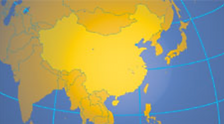
To begin with, a brief introduction of the differences between mainland China and Taiwan will be given. Mainland China, also known as the Chinese mainland, is the geopolitical as well as geographical area under the direct jurisdiction of the People’s Republic of China. It includes Hainan island and strictly speaking, politically, does not include the special administrative regions of Hong Kong and Macau, even though both are partially on the geographic mainland [1]. Taiwan officially the Republic of China (ROC), is a partially recognized state in East Asia. It is the most populous state and largest economy that is not a member of the United Nations [2].
People’s Republic of China flag

The national flag of the Republic of China

Some other differences between Mainland China and Taiwan from the viewpoint of language and culture should be recognized. The official language of Mainland China is standard Chinese. It is one basic form of mandarin Chinese. Mandarin Chinese has been the official language of Taiwan since 1945. In addition, about 70 percent of their population speak Taiwanese, which use traditional characters in all written Chinese, in their daily life. The greatest cultural difference between the two regions is in their ethnic minorities. Taiwan’s aboriginal tribes have a close relationship with Pacific Islanders, which is widely divergent compared with the indigenous people in Mainland China. There are many subtle differences in their traditional cultures, but Taiwanese generally share traditions and cultural practices with people in Mainland china.
When did Christmas come to Mainland China and Taiwan? This is a question that is difficult for historians to answer so far. In fact, answering this question should have a historical premise, that is, the question should be based on the premise of ”when Christianity came to those regions.” According to history records, Christianity has been introduced into China for four times by unremitting efforts from Tang Dynasty to Qing Dynasty, while it inflows into Taiwan in the early 16th Century, the Ming Dynasty. Such a tortuous experience demonstrates the long history and unique meaning of communication, collision and integration between Christianity and Chinese culture. Since then, Christians or people affected by their beliefs began to hold some events to spread their minds.
Christmas was introduced to China by foreign missionaries in the 19th century. After the Chinese economic reform starting from late 1970s, the spread of Christmas in China is particularly prominent. To the beginning of the 21st century, Christmas organically combined the Chinese local conventions and went to a higher and more mature level. Many conventions such as eating apples, wearing Christmas hats, sending Christmas cards, attending Christmas parties and Christmas shopping has become part of Chinese celebration norms on this special festival. In comparison, there is the lack of information about when Christmas flew into Taiwan. But it is obviously that both Chinese and Taiwanese nowadays do consider Christmas as a grand festival.
FACTS ABOUT CHINA
Mainland China
Capital Beijing
39°55′N 116°23′E
Largest city Shanghai
Official language Standard Chinese
Official scriptSimplified Chinese
Recognised regional
languages
READ MORE ON WIKIPEDIA
Taiwan
Status Partially recognized state
CapitalTaipei
25°02′N 121°38′E
Largest cityTaipei–New Taipei
Official languagesStandard Chinese (de facto)[2]
Recognised national languages
Recognised regional languages
Ethnic groups95% Han[6]
∟ 70% Hoklo
∟ 14% Hakka
∟ 14% Waisheng[c]
3.1% New immigrants
2.4% Aborigines[d]
READ MORE ON WIKIPEDIA
