Kanton: JP - Hyvästelyt
Kanton: JP - Hyvästelyt
Ranska: T - Kuvamyyjä
Ranska: T - Kuvamyyjä
Ranska: T - Kuvamyyjä
Ranska: T - Respa
Ranska: T - Respa
FACTS
ITALY
Capital and largest city: Rome
41°54′N 12°29′E
Official languages: Italian
Religion
-
83.3% Christians
-
12.4% irreligious
-
3.7% Muslims
-
0.2% Buddhists
-
0.1% Hindus
-
0.3% other religions
Government Unitary constitutional
parliamentary republic
• President: Sergio Mattarella


Italian flag
HISTORY OF CHRISTMAS
Historically, it is not established that Jesus Christ was actually born on December 25th. In the Gospels of Matthew and Luke, which provide a description of some moments related to the Nativity, neither the day, the month nor the year of the birth of the Son of God is mentioned, even though Jesus was born when the emperor Caesar Augustus was reigning.
The Christian Christmas celebration seems to have been established on December 25 by Pope Julius I only in year 337.
In a document called “Depositio episcoporum” (liturgical list contained in the “Chronograph”, the oldest calendar of the Church of Rome), one learns that this celebration was already present in year 336, although it seems, that initially the festivity was celebrated only in St. Peter's Basilica in Rome.
Other ecclesiastical documents postpone to year 354, under the papacy of Liberio, the first appearance of Christmas in the West. In 461, the day was made official by Pope Leo the Great.
The Church of Rome decided to overlap the recurrence of the birth of Christ with the pagan festival of the birth of the invincible Sun. This idea came from the emperor Aureliano in year 275, in order to suffocate the "Cult of the Sun" still rooted by the Romans, although Constantine had already by then proclaimed the Christian confession as the official religion of the Empire. In 321, Constantine himself had changed the name of the first day of the week (Sunday) from “Dies Solis” (the "venerable" day of the Sun), to “Dominus” ("the Lord's day). This change was not accepted by everyone, and that shows in all languages that kept the word “Sunday” or “Sontag” and all possible variations of those.

Constantine
WHEN IS CHRISTMAS CELEBRATED
In Italy, Christmas is celebrated on the 25th of December, because in Christianity that is believed to be the day when Jesus was born. The celebration of Christmas itself starts on the evening of 24th with a dinner, and on the 25th, people have lunch which is the biggest Christmas meal. Celebrations go on till the end of the 25th.
Le Vacanze di Natale (Christmas holiday) is passionately awaited for the whole autumn by children as well as adults. In schools, the holiday starts on the 22nd of December and last usually until the 7th of January.
At school, before the holidays start children make special handicrafts and prepare performances of different kinds (music, theater) related to different themes that serve both as occasions for education and learning, as well as perfect situations for gathering of students, parents and teachers within a relaxed atmosphere and exchange of mutual wishes.
It is quite common for families to go to skiing resorts in the mountains, although usually during the days around Christmas families must dedicate some time for the so-called “relatives-tours”. Those are more or less authentic/forced visits to all other relatives, also those that you usually never have anything to do with or that you never see and will always meet only during Christmas. People often bring them a cake, a present or a Christmas Star. As the holiday also grants the chance for some peaceful time, families and kids, especially, watch TV more than usual. There is an incredibly rich repertoire of movies related to Christmas on TV, shown regularly and traditionally, and also many movies that have nothing to do with Christmas but that share the element of “magic” and belong under the genre of fantasy. Some of the most seen Christmas movies in Italy are all chapters of the Fantaghiro movies saga!
SANTA CLAUS = BABBO NATALE
The figure of Santa Claus, Babbo Natale in Italian (Father Christmas), originates from Saint Nicholas of Myra (ancient city of present-day Anatolia, in Turkey), a bishop who lived in the 4th century. Santa Claus was named after him, especially in Northern Europe. In Italy, children might have never heard of Santa Claus because Babbo Natale is the only “official” name known.
In reality, the custom of connecting St. Nicholas to gifts is linked to the great gifts that the bishop made in favour of the poor.
Babbo Natale is a round, jovial old man who has a long white beard. He arrives during Christmas Eve on a sleigh pulled by reindeer, goes down the chimney, leaves the gifts to the children, and eats the food that they left for him. During the rest of the year, he is busy manufacturing toys and receiving letters about the behavior of children and from the children themselves about the wished presents when Christmas is approaching.

OTHER IMPORTANT CHARACTERS RELATED TO CHRISTMAS
Babbo Natale is of course the main Christmas character in Italy, but in some regions there are two female characters sharing the scene with him during Christmas time: Santa Lucia (St. Lucy) and Befana. Santa Lucia was a martyr. She was blind. She is believed to have saved Venice from a terrible epidemic deathly disease that killed many people, especially children. All parents convince their children to go on a pilgrimage and by doing that they would have been rewarded by gifts by the Sainte herself.
As a consequence to a time of prayers and devotion, Santa Lucia is believed to have dissolved that plague. Since then, in the night between 12th and 13th of December she rides slowly on a donkey and brings gifts to children. All kids, before going to bed, leave a plate of food on the table so Santa Lucia can strengthen herself and her donkey. The children expect to hear a specific sound: a little bell that announces that the Sainte has arrived at their homes and the presents are being delivered. A good example of Christian history, legends and related traditions. But this occurs only in some regions and provinces in the North: Trentino region, and provinces of Brescia, Bergamo, Udine, Cremona, Lodi, Mantova, Piacenza, Parma, Verona, and Reggio Emilia.
Befana is known all over the country and is portrayed as an old ugly lady, dressed poorly, with huge nose and feet, a few teeth and wrinkles all over her face. In the night of 5th and 6th of January, she flies an old broom, delivers carbon or onions to the children who did not behave well (nowadays it is sweet sugary eatable carbon), and sweet stuff, chocolate and candies but also small presents to all good kids. The kids place empty colorful socks hanging around the house and Befana fills them during the night.
This tradition and character has pagan origins linked to propitiatory rituals for the fertility of the lands. While flying over the lands, Befana would allow things to grow again after winter and that is why in the past parents used to add in the socks together with sweets also ashes as reminder of the original tradition. Befana has corresponding characters in Scandinavia like ”Nuuttipukki” in Finland.

Befana
CHRISTMAS TRADITIONS
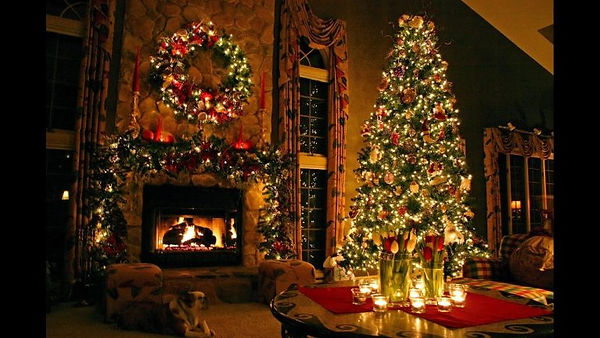
The most important Christmas symbols shared by the whole country are the Christmas tree (albero di Natale) and the Presepe (suom. seimi), an artistic representation of the Nativity of Jesus. Christmas tree has been more recently integrated into the Italian Christmas tradition but it has been widely popular since decades. Its origins are uncertain. The image of the tree as a symbol of the renewal of life is a popular pagan theme, present both in the ancient and medieval world. The derivation of the modern use of the Christmas tree tradition, however, has not been clearly proven.
There is a legend that dates back to many, many centuries ago. The story, in fact, links the Christmas tree to San Bonifacio, the saint born in England around 680 who evangelized the Germanic peoples. It is said that Boniface faced the pagans gathered at the "Holy Oak of Thunder of Geismar" worshipping the god Thor. The Saint, with a group of disciples, arrived in the place where the "Holy Oak" was, and while the pagans were about to perform a human sacrificial rite, he shouted out: "This is your Oak of Thunder and this is the cross of Christ that it will break the hammer of the false god Thor". Taking an ax he began to hit the sacred tree. A strong wind suddenly arose, the tree fell and broke into four parts. Behind the imposing oak stood a young green fir-tree. Saint Boniface turned again to the pagans: "This little tree, a young son of the forest, will be your sacred tree this night. It is the wood of peace since your houses are built out of it. It is the sign of an endless life because its leaves are always green. Observe, as it points straight towards the sky. May this be called the Christ child tree; gather around it, not in the forest, but in your homes; there will be no rites of blood, but gifts of love and rites of goodness ".
Boniface succeeded in converting the pagans, and the head of the village placed a fir-tree in his house, placing candles over the branches.
Among the earliest historical references to the tradition of the Christmas tree, a chronicle of Bremen dated 1570 tells us about a tree decorated with apples, walnuts, dates and paper flowers. But it is the city of Riga, the capital of Latvia, which is the site of the first Christmas tree in history. In Riga's main square, there is a plaque written in eight languages, according to which the "First New Year tree" was decorated in the city in 1510. The custom of having a tree decorated during the Christmas period spread in the 17th century and at the beginning of the following century it was already a common practice in all cities of the Rhineland.
For a long time, the tradition of the Christmas tree remained typical of the Protestant regions of Germany and only in the early decades of the nineteenth century it spread in the Catholic countries. Today the tradition of the Christmas tree is universally accepted also in the Catholic world. Pope John Paul II introduced it in his pontificate by setting up, next to the crib, a large Christmas tree in St. Peter's Square.
Some people prefer real trees for authenticity and smell but most of the people choose fake trees, both sides arguing about which choice is more ecological. During the weekend, parents and children decorate the tree with tinsel, elf figures, colorful balls and lights, never forgetting the beautiful star to be placed on the top of the tree.
The presepe has remote origins. The early Christians used to sculpt or paint the scenes of Christ's birth in their meeting places, for example in the catacombs. The evangelists Luke and Matthew are the first ones to describe the Nativity and, in their Gospels, they mention its representation that from the Middle Ages will take the Latin name of praesepium, or enclosure, manger.
Saint Francis of Assisi was the first to represent the Nativity of Christ in a "living" form, animated by people and represented at Greccio on Christmas Eve of 1223. This event was later portrayed by Giotto in the fresco of the Upper Basilica of Assisi.
Arnolfo di Cambio was the first artist to represent the birth of Jesus in an inanimate form. In 1280, he sculpted eight statues in wood to commemorate the birth of Christ. The remaining statues can still be found in the crypt of the Sistine Chapel of Santa Maria Maggiore in Rome.
Since then the artistic production of Nativity has never stopped. All forms of self-made cribs are found in people's homes today. The essential elements are: the hut where Jesus was born, and to be placed there in the middle; the miniature of Jesus as newborn baby surrounded by Mary, Joseph, the donkey and the cow. In perspective, all other characters are walking towards this house to meet the baby and to bring gifts. A shooting star is placed on top of the house. All miniatures of the presepe are made of different materials such as glass, porcelain, wax, and wood. One can have fun using real moss and cotton to create the effect of grass and snow, tinfoil for the rivers and all tricks to make the scenery as beautiful as possible around the hut. Nowadays one can find also ”live presepi” where people act the scene, and there are wonderful festivals and exhibitions of mechanical presepi too! The presepi (plural of presepe) are usually prepared at everyone’s home together with the Christmas tree at the beginning of the Christmas period.
Food-wise it is impossible to list all traditional food, as every city and small areas have their own. A famous symbolic Christmas cake is the Panettone and its similar version Pandoro, traditionally from Lombardy region (Milan is its capital), but nowadays used everywhere.
In Liguria and Abruzzo regions, but also in other regions and villages of the South, people traditionally burn a tree in Christmas time, and in Molise region there is a tradition of hornpipes players (zampognari).
Calendario dell'Avvento
Also, in Italy, children are very fond of the advent calendar, calendario dell´Avvento, and every morning of the "count-down of days” until Christmas day, they wake up in the morning eager to open a little window of the calendar and eat the chocolate candy hidden inside.
Music
Within the Christmas traditions music plays an important role. The repertoire of Christmas music is very wide, as there are Christmas songs belonging to both sacred and profane traditions and from both classical and folk music literature, many of which are internationally known, where as others are more local.
“Tu scendi dalle stelle” (You come down from the stars) is one of the most important Italian Christmas song, composed in 1754 by Alfonso Maria de' Liguori and everybody knows it.

SANTA IN THE MEDIA
Santa’s character is portrayed as the old man wearing red and white coat, hat and boots as in most of the countries. Very kind, generous, perhaps sometimes confusing or having temporary memory issues because of his age (he wouldn’t remember himself how old he is). His laugh is the most important recognition sign for the real Santa! It should be warm, deep (almost lyrical) but full of affection and authentic goodness.
SANTA'S HELPERS
Santa’s friends known to Italians are the elves (elfi) and the reindeer (renne) that fly him around on the sledge. Most of the kids know about Santa’s wife too, busy cooking for Santa and taking good care of him so that he does not get too tired and overwhelmed by the work, and reminding him of things he might tend to forget.

MEETING SANTA
Usually, people cannot really see him at all. Most kids dream to catch him while he is busy delivering the presents and placing them on floor, carpets and over the furniture of the living room (or the kids’ bedroom) in the middle of the night between the 24th and the 25th. Nowadays, there are opportunities to meet him in some castles or ”Christmas residences/villages” around the country, and they are usually open only in December or slightly before and after. Usually, in every region there is a Christmas village. In Piedmont, for example, Govone seems to be one of the best known Christmas villages nowadays, with markets, Santa’s castle (a real old castle where he gets temporary residence), Christmas musicals and shows. Most of the Italian kids would rather not see him at all than doubting whether he is the ”real” one or not. ”The shopping mall Santas”, for instance, in Italy do not really exist. Even kids do not want to mix such poetical good-willed character with materialistic/consuming approach.

Govone Christmas attraction
PRESENTS
Babbo Natale is always delivering the presents himself, nobody knows how he gets in the houses (except when there is a chimney) but he has his magic tricks. He delivers them in the night between the 24th and the 25th. The presents usually match the list previously written to Santa. Usually the kids are suggested to write the letter and they are told that magically it will reach him if they leave it somewhere where he could find it. Therefore kids in Italy are not usually sending the letters to Santa by post.
The children, when they believe in Santa Claus and they are not told the truth (usually until the age of 10 at the latest), believe that the entire delivery of the presents is done by Santa Claus himself. So all the presents wished in the letters will come from him. Of course, they are well aware of the fact that relatives will give some presents to them as well. But those presents will be received in person before the 25th, and they will be put under the Christmas tree and opened on the morning of the 25th.
The habits of giving out the presents really depend on the family profile and the economic situation. It might also change region by region. Children receive a lot of presents usually!
Usually when a child gets to know that Santa is not ”real” and does not deliver the presents, they ask immediately about the Befana as well, whether she is real either.
NAUGHTY OR NICE
Santa is keen to know and to be reminded about kids’ behavior. It is expected to be a loving yet authoritarian question from him to his visitors. And if kids say they have been good, Santa could easily double check by asking”: ”are you really sure sure you have been good?” =”sei proprio sicuro/a sicuro/a di essere stato/a bravo/a? Or ”sei sicuro/a di esserti comportato/a bene?
(Both questions to be pronounced exactly as you would do in Finnish.)
ABOUT THE LANGUAGE
In Italy there are people (all those who have been in high school, at least) who care about the Italian language spoken correctly and get heavily annoyed by mistakes. The counterpart to this group is older people, or younger but not so cultivated, who make a lot of mistakes whilst speaking Italian. The most common mistake is the use of imperfect tense instead of the conjunctive form just as in English language, actually. But this knowledge is not useful in this context.
Nevertheless, despite the fact that all people usually are impressed and happy to hear their native language spoken abroad in far away lands and they tolerate mistakes with kindness, those mistakes that the elves or Santa might make while speaking, might be more tricky.
Italians themselves make mistakes with verb modes, grammar, or sophisticated vocabulary. Nobody would mind encountering them while speaking to an elf or even Santa, (though Santa is a symbol of knowledge, too, and he really should not make mistakes!!) but it would be better to avoid mistakes with gender, or articles and plural/singular forms; even the ”Tu” form instead of the polite form ”Lei” (with all declinations following the 3rd singular female form) could be more happily accepted than the above mentioned mistakes.
Imagine in English language people removing or adding the articles (“a,” “an,” “the”) randomly. Yet the personnel of the Santa Claus village will be understood regardless of the correct use of the articles.
Generally, the words ending with O are masculine singular words, usually requiring the articles ”Un” and ”Uno” (”a/an in English), and ”il”, ”lo”,” l'” (”the” in English). Ex. Un amico (a friend); l’amico (the friend); uno scoiattolo (a squirrel); lo scoiattolo (the squirrel).
Words ending with ”A” usually are feminine singular words requiring the article”una” (”a”/”an” in English) or ”la”, ”l'” (”the” in English). Ex. Una casa (a house); la casa (the house); l’amaca (the hammock);
The words ending with E can either be singular masculine, singular feminine, or Plural feminine forms.
Un/il dente (singular masculine: A/the tooth)
Una/la mente (singular feminine: A/the mind)
Le case (plural feminine: The houses)
”Le” indeed is the feminine plural article (”the” in English)
The masculine plural articles (also used to address to a group of objects, people or words of mixed genders) are ”I” and ”Gli” (check pronunciation in the phonetic spelling as it is a difficult sound for Finnish people, in Finnish this would be pronounced as ”LJI”).
Gli elfi (the elves); I regali (the presents).
Basically, concerning the plural forms, singular nouns that end in “-o” change to “-i” in plural form; those that end in “-a” change to “-e”; those that end in “-ca” change to “-che”; and those that end in “-e” change to “-i.” Singular nouns that end in accents and consonants, on the other hand, don’t change form when they become plural.
http://en.m.wikipedia.org/wiki/Languages_of_Italy
As you can see in the first picture ”Regional and Minority languages of Italy”, there is an incredibly rich variety of languages spoken in Italy. For each language area represented with all different colors, there are tens of dialects within. The pronunciation might chance completely every 15 km in some cases.
There are sounds that would be hard to know how to start describing to Finns, considering that even the Italian ”G” followed by ”I” or ”E” is pretty hard to explain. It would be easier to imitate the sounds of course, where Finns are very good at.
The word ”allora” is widely used everywhere in Italy to mean ”so..!”. It can be nicely placed before starting any sentence or question!
And if the people are from Tuscany region (Firenze as capital city) an elf or even Santa could say as a fun sentence to show their abilities and knowledge of Firenze area: ”chi vuole una Coca-Cola con la cannuccia corta corta?” That means: ”who wants a Coca-Cola with a super short straw?”
In Tuscany, especially in Firenze, this is pronounced (trying to imagine a Finnish person reading): ”ki vuòle una hohahola con la hannutchia horta horta?
In Tuscany often the letter ”c” is pronounced as ”h”. All Italians make fun of that! If people come from there and hear Santa or the elves saying this sentence they will certainly laugh a lot!
Another word to be used with all people coming from Piemonte (Torino is the capital) is ”nè” to be added at the end of a question to which the answer is already known (it reminds of the use of ”right?” in English language). The voice intonation must ascend as in all questions in Italian.
Hereunder you can find some knowledge on the word ”child” (generally: bambino (male), bambina (female) bambine (pl. Feminine), bambini (pl. Males or mixed) in some of the most important languages/dialects of Italy divided by regions.
First the boy child version and then the girl child version:
Emilia Romagna: Fiulèin /fiulèina
Lazio: citurillu/a
Liguria: matéttu/a
Lombardy:
ninìi (for small babies)
Piedmont:
màt/a or fiulìn/a or masnà (for both genders)
Apulia: piccinnu/a
Sicily: picciotto/a or piccirìddu/a
Culture-wise, people from North are more ”Nordic”, a bit more reserved, more used to formalities and the Southern you go, the louder and more open people generally get. Also more and more available for jokes and interactions.
NEW YEAR
New Year is another important celebration with a huge late dinner prepared and shared by family and friends on the 31st of December, waiting for the midnight together.

Tervetuloa keskustelemaan italialaisesta kulttuurista!
Alla olevan laatikon kautta voit jakaa tietosi ja havaintosi muille käyttäjille.