Kanton: JP - Hyvästelyt
Kanton: JP - Hyvästelyt
Ranska: T - Kuvamyyjä
Ranska: T - Kuvamyyjä
Ranska: T - Kuvamyyjä
Ranska: T - Respa
Ranska: T - Respa
FACTS
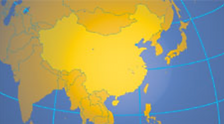
MAINLAND CHINA
Capital: Beijing
39°55′N 116°23′E
Largest city: Shanghai
Official language: Standard Chinese
Official script: Simplified Chinese
Recognized regional
languages
-
91.51% Han
READ MORE ON WIKIPEDIA
TAIWAN
Status: Partially recognized state
Capital: Taipei
25°02′N 121°38′E
Largest city: Taipei–New Taipei
Official languages: Standard Chinese (de facto)
Recognised national languages
Recognised regional languages
READ MORE ON WIKIPEDIA


Flag of the People’s Republic of China

Flag of Republic of China (Taiwan)
Christmas Traditions
Christians make up only one percent of the population in China. The majority of Chinese people are not especially familiar with Christmas. However, in the context of global integration, the level of economic and cultural exchange between China and Western world has been significant. As a product of cultural diffusion, Christmas has gradually become increasingly popular in China.
Christmas in China is colorful. Chinese Christmas serves particularly young people who advocate personality and follow fashion.
Different cities in both mainland China and Taiwan celebrate Christmas almost the same way. Christmas preparations start from the beginning of December. One can experience Christmas atmosphere in the streets, shops, parks, and even in schools. Christmas decorations are found everywhere in different shops and markets. Christmas trees and Christmas lights can be spotted very easily, and people dressed up as Santa Clauses are active in all major commercial events. Beautiful Christmas music such as Jingle Bells is always playing, and it has even been performed in Beijing Opera on Christmas.
Many Christmas decorations are filled with Chinese style. People decorate their Christmas trees with some old traditional decorations such as Chinese poetry. They also use the dragon decorations to send Christmas greetings to everyone. Another great thing is that many employers offer promotions before Christmas. There are also many shops and stores that have big sales on Christmas time and those stores tend to be crowded with excited shoppers.
When Christmas approaches, people often receive Christmas greetings from friends and family members. Apples are very common gifts on Christmas Eve. Many stores have apples wrapped up in colorful papers. People give apples on Christmas Eve because in Chinese, Christmas Eve is called Ping’an Ye, meaning "peaceful or quiet evening", which has been translated from the carol ’Silent Night’. The word for apple in Mandarin is píng guǒ (苹果) which sounds like the word for "peace". Because Christmas is close to the Chinese New Year, many people will choose to celebrate the two festivals together.
As already mentioned, on Christmas Eve, people often give each other apples to express blessings and wishes. Those who get the gift must eat the apples which means they accept their blessings.
Some people also write blessings on cards they send to others. The cards and apples may be send to classmates, friends, family members, colleagues, and so on. Nowadays, there are two types of Christmas cards: ordinary greeting cards and e-cards. General web e-cards have a background music. E-cards can also come with different styles and varieties. A popular way is to fill the recipients’ name and the sender's wishes on the e-card pages, and the greetings will be automatically sent through email.
Even in some Christmas parties organized by the companies or restaurants, Santa Claus, played by an actor, can give gift cards or apples to the audience.
People in the Western countries often reunite with their families on Christmas Day. However, the typical Christmas event for Chinese people is to go out for some entertainment: going to movie, or to sing Karaoke, going shopping, and so on. Young couples often view Christmas Day as a romantic day. They give gifts to each other like on Valentine’s Day. Amusement parks are another popular place for people to enjoy this day.

Basic Information of China And Taiwan
To begin with, a brief introduction of the differences between mainland China and Taiwan will be given. Mainland China, also known as the Chinese mainland, is the geopolitical as well as geographical area under the direct jurisdiction of the People’s Republic of China. It includes Hainan island and strictly speaking, politically, does not include the special administrative regions of Hong Kong and Macau, even though both are partially on the geographic mainland.
Taiwan, officially the Republic of China (ROC), is a partially recognized state in East Asia. It is the most densely populated state and largest economy that is not a member of the United Nations.
Some other differences between Mainland China and Taiwan from the viewpoint of language and culture should be introduced here as well. The official language of Mainland China is Standard Chinese. It is a basic form of Mandarin Chinese.
Mandarin Chinese has been the official language of Taiwan since 1945. In addition, about 70 percent of the population in Taiwan speak Taiwanese. They use traditional characters in all written Chinese in their daily lives.
Christmas is celebrated more widely in Taiwan than in mainland China, although not many people in Taiwan are Christians (about 5%). Many stores sell Christmas related items during Christmas season. Also, Christmas is not considered as a national holiday in Taiwan. Different events such as singing hymns and sending small gifts are organized in various churches across Taiwan on Christmas Day.
In Taiwan, young people often arrange Christmas dinners and Christmas parties beforehand. Taiwanese prefer to choose Western or Japanese restaurants, or barbecue or hotpot restaurants to enjoy Christmas dinner. In particular, all kinds of good steakhouses are fully booked since the beginning of December. One must make an appointment early or otherwise it will not be possible to get a seat in any restaurant. At dinner, Santa Claus is expected to bring gifts and draw lottery as an entertainment for children. Christmas in Taiwan is also a Thanksgiving Day, and people organize a variety of charity events.
History of Christmas
Nowadays, many Asians, especially young people, are very keen on Christmas. To start with, the origins of Christmas in China and Taiwan will be introduced together.
When did Christmas come to Mainland China and Taiwan? This is a question that has been difficult for historians to answer so far. In fact, answering this question should have a historical premise, that is, the question should be based on the premise of ”when did Christianity come to those regions.” According to history records, Christianity was introduced to China four times by unremitting efforts from Tang Dynasty to Qing Dynasty. In Taiwan, early Protestantism was driven out of the country in the 17th century by a loyalist of the Ming Dynasty. Such a tortuous experience demonstrates the long history and unique meaning of communication, collision and integration between Christianity and Chinese culture. Since then, Christians or people affected by their beliefs, began to hold some Christian events to spread their ideas.
Christmas was introduced to China by foreign missionaries in the 19th century. Since the Chinese economic reform starting from late 1970s, the spread of Christmas in China is particularly prominent. Up until the beginning of the 21st century, Christmas organically combined the Chinese local conventions to the Western ones, and the festival went to a higher and more mature level. Many traditions, such as eating apples, wearing Christmas hats, sending Christmas cards, attending Christmas parties, and doing Christmas shopping have become part of Chinese celebration norms during this special time.
In comparison, there is a lack of information about when Christmas began celebrated in Taiwan. Nowadays, it is obvious that both Chinese and Taiwanese consider Christmas as a grand festival.
Santa Claus
Employees from shops, supermarkets, and restaurants dress up as Santa Claus to create an atmosphere of Christmas in both Mainland China and Taiwan. Some shopping malls even arrange large-sized Santa Clauses to interact with customers from the beginning of December. In primary schools and kindergartens, children and teachers wear Santa’s clothes and play games together. Some restaurants and hotels organize Christmas parties where Santa Claus gives prizes and hands out small gifts such as candies and socks for entertainment.
The Santa Claus culture is increasingly visible to public through social media. For example, according to some media reports, the ”Christmas Run”, which swept the world in recent years, is prevalent in some cities of Mainland China. People wear Santa costumes to warm up before the ”Christmas Run” event. In Taiwan, Santa Claus can ride a motorcycle to distribute candy on the road.


Chinese Santas
Other Significant Holidays
Mainland China and Taiwan share a lot of significant holidays such as Spring Festival, the Lantern Festival, Mid-autumn Festival, the Dragon Boat Festival and so on. Chinese New Year is the most important festival celebrated by the ethnic Chinese. The Chinese New Year (also known as Spring Festival, Chinese Lunar New Year, and Lunar New Year) is based on the Chinese lunar calendar, and it begins on the first day of the first lunar month. On the Chinese New Year’s Eve, family members gather together to enjoy the delicious and sumptuous New Year’s Eve dinner. Some people even try to stay up late or all night to welcome the New Year because they believe that their family members can live forever by doing so. On the first day of the Chinese New Year, people often dress up in red, which represents luckiness and propitious. People visit relatives and friends, and send their best wishes to each other. Nowadays, children are very happy when they greet elders with auspicious words and receive red packets from them.
The Lantern Festival is also called First Full Moon Festival because the first full moon day of the New Year will appear on that day. It is celebrated annually on the 15th day of the first lunar month which not only shows the grand finale of the Chinese New Year celebrations, but also symbolizes the arrival of the spring. People usually celebrate this festival by enjoying family dinner together, eating rice ball (glutinous rice dumpling), carrying paper lanterns, and solving the riddles on the lanterns. The festival is celebrated with fanfare events in Taiwan, including the internationally famed Pingxi Sky Lantern Festival in New Taipei City, Bombing Lord Han Dan in Taitung, and Yanshui Beehive Rockets Festival in Tainan, to welcome the New Year in a spirit of peace, prosperity and joy.

Spring Festival

The Lantern Festival
Tervetuloa keskustelemaan kiinalaisesta kulttuurista!
Alla olevan laatikon kautta voit jakaa tietosi ja havaintosi muille käyttäjille.